Not everyone deserts Vermont when it gets frigid and windy
and downright dangerous. Lots of birds stick around, including several big beauties to delight us on winter walks and rides.
Members of the corvid family - crows, jays and ravens – are loyal to the north country no matter
what the weather.
Corvids are considered the smartest avian creatures and
among the most intelligent of any animal.
Crows
have been seen dragging dead animals from the sides of the road to the middle
so that cars will break open the roadkill for them. Even with their big beaks,
crows can’t get to the meat through skin and fur!
Because they eat anything and everything, corvids have more
free time than birds that must spend every minute of daylight hunting for
specific kinds of caterpillars or particular kinds of seeds. And corvids fill
that extra time with thinking and inventing and playing. One crow studied a
piece of trash – the lid of a quart-sized yogurt container – for a few seconds,
picked it up, carried it to the peak of a steep-roofed shed, stood on it, and
used it as a sled all the way down the roof. It was so much fun that the crow
did it again and again and again.
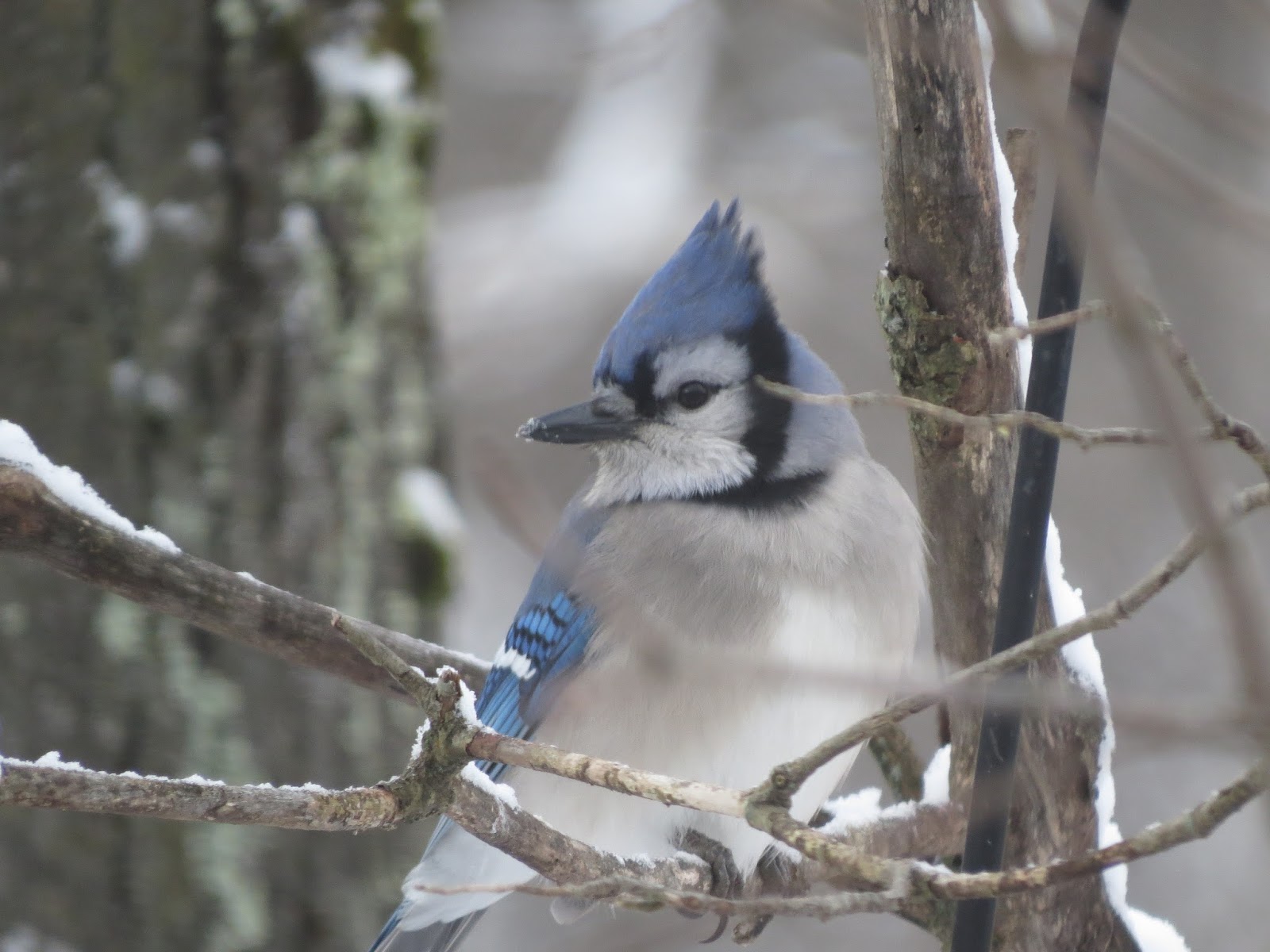
Most Vermonters are familiar with Blue Jays. The state’s
other jay is found only in the Northeast Kingdom.
Gray Jays don’t see many of us two-legged creatures, but they all recognize humans as food sources and will
come to take food right out of a person’s hand.
When lumbering was big in the NEK, Gray Jays were called Camp
Robbers because they’d steal food from the tables while the loggers were eating. The handsome birds were also called
Whiskeyjacks, a mispronunciation of an Algonquian word
for a mischievous prankster.
Several pairs of Bald Eagles now breed in Vermont, and many more show up throughout
the Champlain Valley in wintertime. They prey on ducks and sometimes hang out
near ice fishermen waiting for tossed fish.
Other big winter birds include several
kinds of hawks. Red-tailed Hawks
patrol the edges of the interstate, their sharp eyes seeking rabbits,
squirrels, voles and moles. Rough-legged Hawks hover like giant butterflies
over farm fields, while Northern Harriers dance and float nearby. Sharp-shinned
Hawks and Cooper's Hawks visit backyard feeders with the enthusiasm of a hungry
human at an all-you-can-eat buffet. Ahhhh.
All this yummy food in one location!!
Cooper's Hawk watching our feeders ...
Every now and then the larger cousin of Sharp-shinned and Cooper's Hawks decides to leave its regular home in Canada and spend the winter in
Vermont: a Northern Goshawk. This is a fierce bird! Attila
the Hun wore an image of a goshawk on his helmet. The name comes from the Old
English words for goose and hawk. It’s our only hawk that can actually take a
goose as prey, although it’s more likely to take ducks, pigeons, grouse, crows
and gulls, hares and various rodents.
And then there are the
owls! Wonderful, mysterious, elusive, gorgeous, exciting owls. More about these winter beauties soon.
text by Maeve, photos by Bernie